


Choosing the right RFID solution can transform asset tracking from manual searching into a clearer, faster process. Rfid Tags For Asset Tracking help teams identify equipment, containers, tools, and other valuable items with fewer visual checks. However, no single tag performs perfectly in every environment.
A tag’s material, frequency, read range, and attachment method all matter. A warehouse label may work well on cardboard boxes. It may fail near metal shelving or liquid-filled containers. Rugged on-metal tags often suit machinery, while compact inlays may fit returnable packaging. Active RFID tags can support longer-range monitoring, but they usually require batteries and higher maintenance.
This guide compares practical tag types for different asset-tracking conditions. It considers durability, scanning distance, memory, environmental exposure, and installation costs. Real-world testing remains essential. A tag that reads reliably in a clean office may struggle beside a busy loading dock. Small details matter, such as adhesive strength, reader placement, and the angle of a handheld scanner.
Good recommendations should come from documented testing and relevant industry experience. Teams should pilot tags on representative assets before making a large purchase. Record missed reads, damaged tags, battery life, and worker feedback. That evidence is more useful than attractive product claims.
There is no perfect choice.
Even experienced teams can overlook changing temperatures, cleaning chemicals, or crowded storage areas. This guide recognizes those limitations and focuses on dependable selection rather than unrealistic promises. The best RFID tag is the one that remains readable, secure, and practical throughout the asset’s working life.
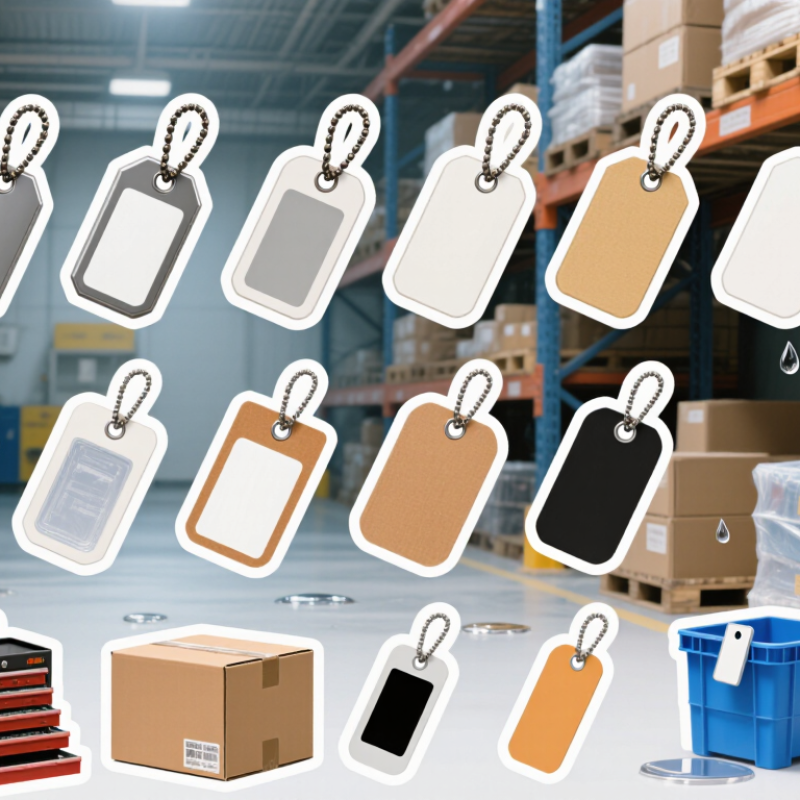
RFID Tag Basics for Asset Tracking
The best RFID tag is not always the strongest or most expensive. It must match the asset, surface, environment, and reading distance. Passive UHF tags, based on EPC Gen2v2 and ISO/IEC 18000-63, suit many warehouses and equipment rooms. They need no battery and can be scanned without direct sight. Their small size also supports cartons, tools, returnable containers, and labeled equipment.
Tag performance changes sharply on metal, liquid, or moving machinery. On metal assets, use a raised spacer or an on-metal design. For outdoor equipment, check resistance to water, dust, heat, and cleaning chemicals. The RAIN Alliance reported more than 50 billion RAIN RFID tags sold globally in 2023, showing strong industrial adoption. Yet high volume does not guarantee accuracy. Controlled trials from the Auburn University RFID Lab have reported inventory accuracy above 95% when tags, readers, and processes were properly configured. Real sites can perform worse.
Tips: Test tags on the actual asset before purchasing. Record read distance, missed reads, attachment method, and damage after handling. Keep a small sample for repeated testing. Do not trust a single doorway test. A tag may read well at rest but fail inside a crowded metal cage. That is an easy detail to overlook. Review data quality weekly, because incorrect placement can quietly create false confidence.
Choosing an RFID tag for asset tracking starts with the asset, not the reader. Metal shelves, liquid containers, and dense plastic can weaken radio performance. A tag designed for cardboard may fail on a steel tool cabinet. Test tags in the exact mounting position, including paint, dust, and protective covers. A perfect tag does not exist.
Frequency matters. UHF tags usually support longer read ranges and rapid inventory counts, while HF tags suit shorter-range identification. Select a tag that follows approved interoperability standards, such as ISO/IEC 18000-63. Check memory capacity, read sensitivity, antenna design, and reader compatibility.
Grand View Research forecasts the RFID market to grow at about 11.9% annually from 2024 through 2030. That growth increases choice, but it can also make specifications harder to compare.
Durability deserves equal attention. For outdoor assets, review the ingress rating, operating temperature, impact resistance, and adhesive life. For returnable containers, consider washable or reusable tag constructions.
MarketsandMarkets projects the RFID market will rise from roughly 15.8 billion dollars in 2023 to 27.8 billion dollars by 2028. Forecasts use different market definitions, so treat them as direction rather than certainty.
In field trials, measure read accuracy, missed reads, installation time, and replacement rates. Cheap tags can become expensive after repeated failures.
Small details matter. Test longer than planned.
What Are the Top RFID Tags for Asset Tracking?
Passive UHF tags suit warehouses, storage rooms, and pallet tracking. They can scan many items quickly from several meters away. These tags usually need no battery. That keeps maintenance simple.
HF and NFC tags work better for short-range identification. Staff can tap a handheld reader against tools, medical equipment, or service records. Their controlled reading distance can reduce accidental scans. For high-value assets moving through large sites, active RFID tags provide longer range and location updates. They use batteries, so teams must monitor battery life and replacement schedules. Rugged tags are useful outdoors, on metal surfaces, or in areas exposed to heat, moisture, and vibration. Material selection matters.
I have seen a tag perform perfectly on a plastic container but fail on a steel cabinet. The early test looked convincing. It was not enough. Mounting position, reader angle, liquid contents, and nearby metal can change results. On-site trials should measure read accuracy during normal movement, not only during setup. Teams should also record missed reads and investigate them. A cheaper tag may create higher labor costs later. A durable tag may be unnecessary for clean indoor assets. Choose the tag around the asset, environment, scanning distance, and workflow. No tag is perfect.
| RFID Tag Type | Operating Frequency | Power Source | Typical Read Range | Key Characteristics | Best Asset-Tracking Uses | Main Considerations |
|---|---|---|---|---|---|---|
| Low-Frequency Passive Tags | 125–134 kHz | Powered by the reader's field | Up to about 0.5 m | Reliable near liquids and some animal tissue; supports short-range identification and generally has low data capacity. |
| Short read distance and slower data communication make it unsuitable for wide-area, high-throughput portals. |
| High-Frequency Passive Tags | 13.56 MHz | Powered by the reader's field | Up to about 1 m | Offers consistent short-range reads, good interoperability with smart-card technologies, and better performance around liquids than UHF. |
| Read range is usually shorter than UHF, and multiple-item tracking is less suitable for large open areas. |
| Near-Field Communication Tags | 13.56 MHz | Usually passive | A few centimeters | Designed for intentional tap-to-read interactions and can be read by many compatible mobile devices. |
| Very short range improves user control but prevents automatic detection across rooms, doorways, or loading lanes. |
| Ultra-High-Frequency Passive Tags | 860–960 MHz, region dependent | Powered by the reader's field | Typically 3–12 m | Supports fast bulk reading and long-range identification; performance is affected by metal, water, tag orientation, and reader configuration. |
| Use specialized designs or spacing when tagging metal or liquid-filled assets; local frequency regulations must be observed. |
| On-Metal Passive Tags | Usually HF or UHF | Powered by the reader's field | About 1–12 m, depending on frequency and design | Includes a spacer or engineered backing that reduces detuning when attached to metal surfaces. |
| Standard adhesive labels may perform poorly on metal; surface curvature, mounting clearance, and material thickness affect results. |
| Rugged Encapsulated Tags | Usually UHF, HF, or LF | Passive | Depends on the embedded RFID technology | Sealed in plastic, epoxy, ceramic, or other durable materials to resist impact, moisture, chemicals, dust, and temperature extremes. |
| More durable than paper labels but generally larger, more expensive, and less flexible to install. |
| Battery-Assisted Passive Tags | Commonly UHF or HF | Embedded battery assists the tag circuitry | Often longer or more reliable than standard passive tags | The battery powers sensors or improves tag sensitivity, while communication may still depend on a reader interaction. |
| Battery life, sensor accuracy, replacement policy, and end-of-life disposal must be managed. |
| Active RFID Tags | Commonly 433 MHz or 2.4 GHz, system dependent | Internal battery | Approximately 30–100 m or more | Can transmit periodically or on demand, support longer-range visibility, and may include motion, temperature, or location-related sensors. |
| Higher purchase and maintenance costs; batteries require monitoring and replacement, and radio performance depends on the site layout. |
| Printable RFID Inlays and Label Tags | Usually HF or UHF | Passive | Depends on the embedded inlay | Combines an RFID inlay with a printable label for human-readable text, barcodes, or serialized asset information. |
| Low cost and easy to print, but paper or standard adhesive constructions may not withstand harsh environments. |
For most asset-tracking projects, passive UHF RFID tags offer the best balance of range and cost. Standard labels usually read from 3 to 10 meters with fixed readers. Handheld performance is often shorter, especially around people, liquid, and metal. The RAIN Alliance’s 2024 industry report estimates roughly 50 billion RAIN tags were sold worldwide in 2023. That scale supports low unit pricing, often a few cents for basic labels purchased in volume.
Durability changes the decision quickly. Paper labels suit cartons, files, and indoor equipment. Encapsulated plastic tags resist dust, moisture, and repeated handling. Metal assets need on-metal tags with a spacer or specialized antenna. In field testing, tag placement mattered as much as tag design. A tag mounted beside a steel edge may perform worse than a cheaper tag placed correctly.
The Auburn University RFID Lab’s ARC quality testing also shows that approved tags can perform differently across materials and orientations. Range is not guaranteed.
For harsh environments, rugged tags cost more, commonly from one to several dollars each. They may survive temperature swings, washing, vibration, or outdoor exposure. That price can still be justified when manual counting takes hours. I once saw a “low-cost” label fail after condensation formed under its surface. The savings disappeared.
Read range is useful, but reliable reads matter more. The GS1 EPC Gen2 UHF specification supports global interoperability, yet local testing remains essential. No tag wins everywhere. A short pilot with real assets, readers, and mounting positions is usually the safest investment.
What Are the Top RFID Tags for Asset Tracking?
Selecting the right RFID tag starts with the asset, not the reader. RAIN Alliance reported that more than 45 billion RAIN RFID chips shipped in 2023. That scale shows adoption, but it does not make every tag suitable. A plastic tote may use a standard passive UHF tag. A steel tool cabinet needs an on-metal tag with shielding or a raised mounting surface. Test both.
Material and environment matter most. Metal, liquid, heat, dust, and repeated washing can reduce read reliability. GS1 guidance recommends using globally standardized identification data and testing tag placement before deployment. Check the required read distance, memory capacity, adhesive strength, and operating temperature. For a warehouse shelf, a tag readable at three meters may be enough. For a moving pallet, consistent reads from several angles matter more.
Professional testing can prevent expensive assumptions. Auburn University’s RFID Lab ARC program evaluates tag performance across difficult materials and operating conditions. Use comparable test samples, not only a clean desk prototype. Measure missed reads, not just successful reads. I have seen teams choose the cheapest tag, then discover poor adhesion after two weeks. That mistake is easy to repeat. A short pilot with real assets, dust, handling, and normal reader positions offers stronger evidence than a supplier datasheet.
Select the right RFID tag by matching read distance, asset material, and operating conditions. Passive UHF tags are commonly used for warehouse and supply-chain tracking, HF/NFC tags suit close-range identification, and active RFID tags support long-distance tracking for high-value or widely distributed assets. The ranges shown are representative industry values; actual performance varies with reader power, antenna design, tag orientation, and mounting surface.
5107 County Road C
Manitowoc, WI 54220
920-726-4526