How to Choose the Right Composite Part Supplier?
Choosing the right Composite Part supplier begins long before a purchase order reaches the factory. It starts with understanding your part’s real demands. Will it face vibration, heat, moisture, impact, or repeated loading? A supplier that only discusses price may miss the most important risks.
Dr. Stephen Tsai, a respected composite mechanics researcher, offers a useful design principle: “Design determines performance; material selection alone cannot save a poor design.” His point applies directly to supplier selection. A capable partner should understand fiber orientation, resin behavior, tooling limits, and the final operating environment. They should ask for drawings, load cases, tolerances, and service conditions. They should not simply accept incomplete specifications.
Look for evidence, not polished promises. Review previous Composite Part projects with similar geometry or performance requirements. Ask how the supplier controls layup, curing temperature, void content, surface finish, and dimensional accuracy. Request material certificates, inspection records, and test data. A reliable supplier can explain what happens when a batch fails inspection. That answer matters.
Factory experience also reveals practical judgment. Can the team identify a weak corner before production? Can engineers suggest a simpler layup without reducing strength? Can they produce a prototype, measure it, and discuss unexpected results honestly? These details often separate a true manufacturing partner from a broker.
No supplier is perfect. Neither is every specification. Recheck assumptions. A cheaper quote may hide tooling changes, rework, or delayed testing. The strongest choice is usually the supplier that communicates clearly, documents consistently, and accepts technical scrutiny. That confidence must be earned.
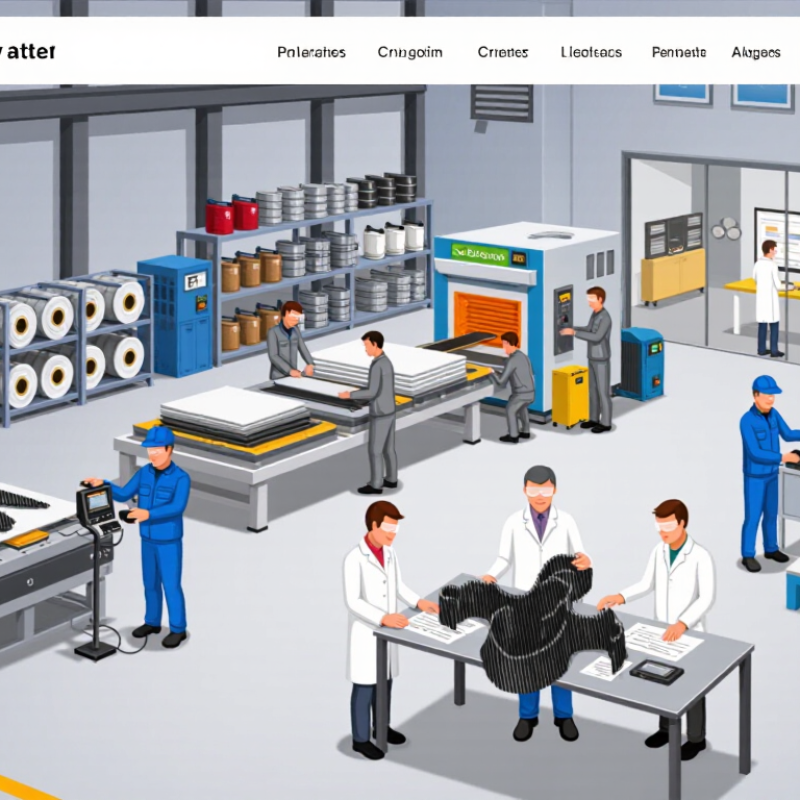
Define Your Composite Part Requirements and Performance Goals
Choosing a composite part supplier starts with a clear definition of the part itself.
Describe its load, dimensions, operating temperature, moisture exposure, and expected service life. A bracket supporting repeated vibration needs different reinforcement from a decorative housing. State the load direction, peak force, cycle frequency, and acceptable deflection. Include drawing tolerances and surface requirements. Small details matter.
I have seen projects stall because teams selected materials before defining performance goals.
My early mistake was trusting a familiar fiber system without checking heat and moisture together. The part passed a dry test, then changed shape after prolonged exposure. Test it in realistic conditions. Ask suppliers for data from comparable geometries, not only standard coupons. Review fiber orientation, resin content, void limits, joining methods, and inspection plans. Also define production volume and acceptable variation. A prototype and a production part may behave differently.
Keep requirements measurable.
“Lightweight and strong” is too vague. Use targets such as maximum mass, tensile strength, stiffness, impact energy, and dimensional stability. Identify which values are minimums and which are preferences. Leave room for review. Some targets may conflict, and forcing every requirement can increase cost or reduce reliability. Share the complete requirement sheet with potential suppliers, then ask how they would validate each goal. Their questions often reveal gaps in your own specification. Be willing to revise it.
Verify Quality Systems, Certifications, and Testing Procedures
How to Choose the Right Composite Part Supplier?
A reliable supplier should show more than polished brochures. Ask how its quality system controls materials, production, inspection, and corrective actions. A current ISO 9001 certificate can indicate structured processes, but it is not proof of perfect parts. Check the certification scope, issuing body, and expiration date. The supplier should also provide clear material certificates, lot traceability, and documented work instructions.
Testing procedures deserve close attention. Request sample reports for tensile strength, fiber content, void inspection, dimensional checks, and environmental exposure. Confirm who performs each test and whether the equipment is regularly calibrated. During supplier visits, look for labeled material storage, controlled curing records, and technicians who understand acceptance limits. In my experience, small gaps often appear between written procedures and actual shop-floor habits. Ask how failed parts are contained, investigated, and prevented from recurring. Honest answers matter.
Tips: Compare real records, not promises. Ask for a recent nonconformance example. Verify that test methods match your part’s material and service conditions. If a supplier refuses reasonable evidence, pause the evaluation. A strong supplier may still have occasional defects; the difference is visible control, traceable decisions, and timely improvement. Perfect claims deserve reflection.
Compare Pricing, Lead Times, Communication, and Supply Capacity
When choosing a composite part supplier, compare more than the quoted unit price. Ask for a cost breakdown covering tooling, setup, inspection, packaging, and freight. A low quote can shift costs elsewhere. Check whether the price assumes a specific resin, fiber orientation, finish, or annual volume. Then compare lead times using the same assumptions: tooling approval, first-article inspection, and repeat orders should be listed separately. Request recent delivery performance, not only a best-case estimate. A few late parts can hold up an entire assembly line.
Communication and capacity deserve equal scrutiny. Ask who owns engineering questions, how quickly they respond, and what happens when a drawing changes. Request a sample production schedule showing available shifts, equipment, and backup plans for material shortages. McKinsey’s 2020 supply-chain survey found that 93% of respondents planned to increase resilience, highlighting why contingency planning matters. The figure covers supply chains broadly, not composite suppliers specifically. Keep that distinction in mind. During a plant visit, look for practical evidence: labeled material storage, documented inspection steps, and a clear path from incoming fibers to finished parts. I would also ask for a recent capacity review; forecasts can be wrong, and supplier answers deserve verification.
How to Choose the Right Composite Part Supplier? — Compare Pricing, Lead Times, Communication, and Supply Capacity
An illustrative comparison of supplier profiles for a recurring order of custom composite parts. Values are example RFQ figures, not verified quotations; actual costs and schedules depend on design, material, tooling, inspection, and order volume.
| Supplier Profile | Indicative Unit Price | First-Article Lead Time | Repeat-Order Lead Time | Communication & Documentation | Indicative Monthly Capacity | Best Fit |
| Prototype-focused shop | US$180–260 | 3–5 weeks | 2–4 weeks | Direct engineering contact; design feedback and inspection records available on request | 50–200 parts | Early prototypes, design changes, and low-volume builds |
| Small-batch specialist | US$120–190 | 4–7 weeks | 3–5 weeks | Regular project updates; documented material traceability and first-article inspection available | 200–1,000 parts | Stable designs requiring repeatable small-to-medium production runs |
| Mid-volume production supplier | US$75–140 | 6–10 weeks | 4–7 weeks | Assigned account contact; scheduled status reporting and formal quality documentation | 1,000–5,000 parts | Recurring orders where unit cost and predictable replenishment matter |
| High-capacity manufacturer | US$45–100 | 8–14 weeks | 5–9 weeks | Structured program management; capacity planning and change-control processes should be confirmed | 5,000+ parts | High-volume programs with stable forecasts and longer-term agreements |
Assess Samples, References, and Long-Term Partnership Potential
A supplier’s sample should be tested, not admired. Request production-intent parts made with the same resin, reinforcement, tooling, and curing cycle. Measure dimensions, fiber volume, surface finish, and failure points. Record results in a simple comparison sheet. A polished sample can still mislead.
MarketsandMarkets projects the global composite materials market to grow from about USD 94 billion in 2023 to USD 131 billion by 2028. This expansion makes supplier claims easier to find, but harder to verify. Ask for inspection records, process capability data, and material traceability. Small details matter. Check how the supplier handles rejected parts, design changes, and delayed raw materials. These answers reveal operational maturity better than a sales presentation.
References should match your application, not merely your industry. Speak with customers who receive similar volumes, tolerances, and certification requirements. Ask about consistency after twelve months, not only the first delivery. A 2023 Deloitte manufacturing survey found that supply-chain resilience remains a major investment priority for manufacturers. Therefore, assess backup tooling, second-source materials, engineering response time, and communication routines. My own caution is simple: long-term partnership potential cannot be proven during one factory visit. Run a controlled pilot, review three delivery cycles, and leave room to challenge your first impression.
How to Choose the Right Composite Part Supplier
Suggested evaluation weight for samples, references, and long-term partnership potential
Use this proposed scoring framework as a starting point, not as industry survey data. Assess samples for dimensional accuracy and consistency, verify references for comparable projects, and review a supplier’s capacity, quality controls, and communication for a sustainable long-term partnership.