7 Tips for Choosing the Best RO Filtration System
Choosing a reverse osmosis system is not just a matter of comparing prices or counting filter stages. The right fit depends on your source water, daily use, available space, and willingness to replace filters on schedule. A tap-water report can reveal whether sediment, hardness, or specific dissolved contaminants deserve attention. Details matter.
The WHO/UNICEF Joint Monitoring Programme reported that 2.2 billion people lacked safely managed drinking water in 2022. That global figure does not tell you which home system to buy, but it highlights why treatment claims deserve careful checking. For household decisions, look for independently tested contaminant-reduction claims, clear replacement schedules, and realistic output rates. A small under-sink unit may suit a couple; a busy kitchen may need a larger storage tank. Not just price.
Membrane expert Menachem Elimelech’s published research examines reverse osmosis alongside energy use and membrane fouling. A fair paraphrase of its practical lesson is simple: judge performance together with operating demands. That is important when comparing any Ro Filtration System. A high rejection rate sounds impressive, yet it cannot answer every question about taste, maintenance, wastewater, or performance as filters age. I should admit, product labels can make those trade-offs easy to miss.
The following seven tips offer a grounded way to compare options: verify your water needs, check certification, assess capacity, review maintenance, understand wastewater, compare total cost, and confirm support. Your circumstances may differ. That is precisely why a careful checklist helps.
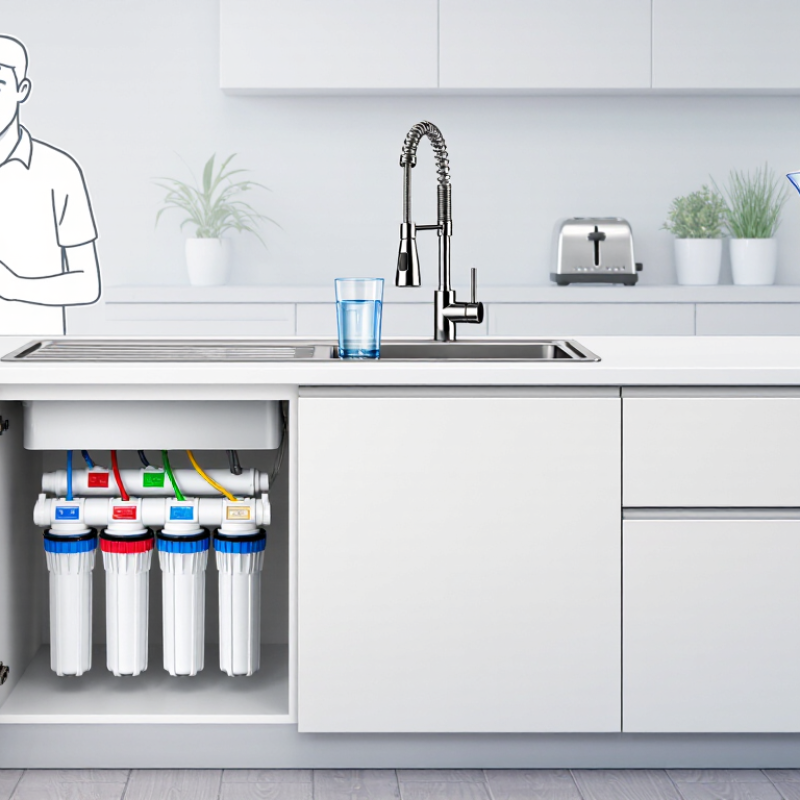
Understand How Reverse Osmosis Filtration Works
Reverse osmosis (RO) uses water pressure to push water through a semipermeable membrane. The membrane allows water molecules through while reducing many dissolved salts and other substances. A separate reject stream carries concentrated material toward the drain. In many under-sink systems, sediment and carbon prefilters catch particles and reduce chlorine before water reaches the membrane. This helps protect the membrane. Performance varies with feed-water quality, pressure, temperature, and maintenance. That is the basic path.
Tip: Check which stages your system uses and what each one is designed to reduce. RO does not remove every possible contaminant, and a low total dissolved solids reading does not prove water is free of all unwanted substances. For specific concerns, compare the system’s independent test data with your water report. Not magic.
Tip: Follow the replacement schedule, but also watch for changes in flow or taste. A clogged prefilter can slow production; an aging membrane may reduce performance. Many units store treated water in a small tank, so output is not always immediate. Check the manual for flushing instructions after replacing filters. I used to assume slower flow meant a failing membrane, but clogged prefilters can cause it too. That detail is easy to miss.
Assess Your Water Quality and Household Needs
Before choosing an RO system, find out what is actually in your water. A recent utility water-quality report can identify common minerals, disinfectants, and listed contaminants. If you use a private well, arrange testing through a qualified laboratory, since conditions can change. Testing matters. Pay attention to hardness, nitrate, lead, and total dissolved solids, but do not assume one number explains everything. A result is useful only when you know the test method and sampling date. It is easy to overread a single test. If results are unclear, ask a local water professional which contaminants need follow-up testing.
Then consider how your household uses water. A couple who mainly drinks tap water may need less daily output than a family that also cooks with it. Check the unit’s rated production, storage-tank capacity, and your available sink or cabinet space. Low incoming pressure can affect performance, so check the installation requirements before buying. RO systems also send some water to drain; the amount varies by design and operating conditions. Not every system reduces every contaminant. Compare independent certifications and specific reduction claims with your test results. Filters and membranes need timely replacement, too. I would not assume maintenance will take care of itself; a note on the cabinet door can help.
Assess Water Quality and Household Needs
Estimated daily purified-water demand by household size
Planning estimate: 3 liters per person per day for drinking and cooking. Actual use varies; check your household’s consumption and your water test results before choosing a system’s rated daily output.
Compare System Types, Capacity, and Certifications
An under-sink RO system treats drinking water at one tap and usually suits smaller households. A tank model stores filtered water, while a tankless model saves cabinet space but depends on adequate plumbing pressure. Whole-house RO can serve more outlets, yet it needs more space, careful sizing, and often higher operating costs. Match the design to your actual use, not the most impressive product description. That distinction matters.
Check capacity in gallons per day, then compare it with your household’s drinking and cooking needs. A rating is not a promise of constant output; cold water and low inlet pressure can slow production. If several people fill bottles before work, storage capacity and recovery time deserve attention. Look at wastewater, too. Some systems send several gallons to drain for each gallon produced, and that ratio varies with pressure and setup. I would not choose on capacity alone.
Certifications can help verify specific performance claims. For RO systems, look for NSF/ANSI 58 certification, and confirm the exact model in the certifier’s directory. A standard may cover particular claims, not every contaminant or every component. Read the certified reduction list and check replacement-filter availability. Small print can be easy to miss. Compare installation requirements and filter-change intervals before buying; maintenance is the part people often underestimate.
Choose a System That Fits Your Home and Budget
Choosing an RO system starts with your water source and daily drinking needs, not the biggest advertised capacity. The U.S. Geological Survey’s 2015 water-use report estimated domestic use at 82 gallons per person per day. That figure includes showers, laundry, and other uses, so it is not a sensible target for a kitchen RO unit. Track your household’s drinking and cooking water for a week. Then compare that demand with the system’s rated daily output and storage-tank capacity. Small details matter. A tank can run low during busy mornings, while excess capacity may add cost without helping your household.
The Centers for Disease Control and Prevention estimates that about 43 million people in the United States use private wells. If that describes your home, test the water before paying for extra filtration stages. Check that any performance claims match the contaminants found in your test results; NSF/ANSI 58 certification covers specific RO system claims, not every possible contaminant. Test first. Compare the full cost, too: installation, replacement filters, membrane changes, and wastewater all affect the long-term budget. It is tempting to choose the most advanced unit, but more features are not automatically better value. I would leave room in the budget for maintenance. That part is easy to overlook.