How to Choose the Best Photoelectric Sensors for Your Needs?
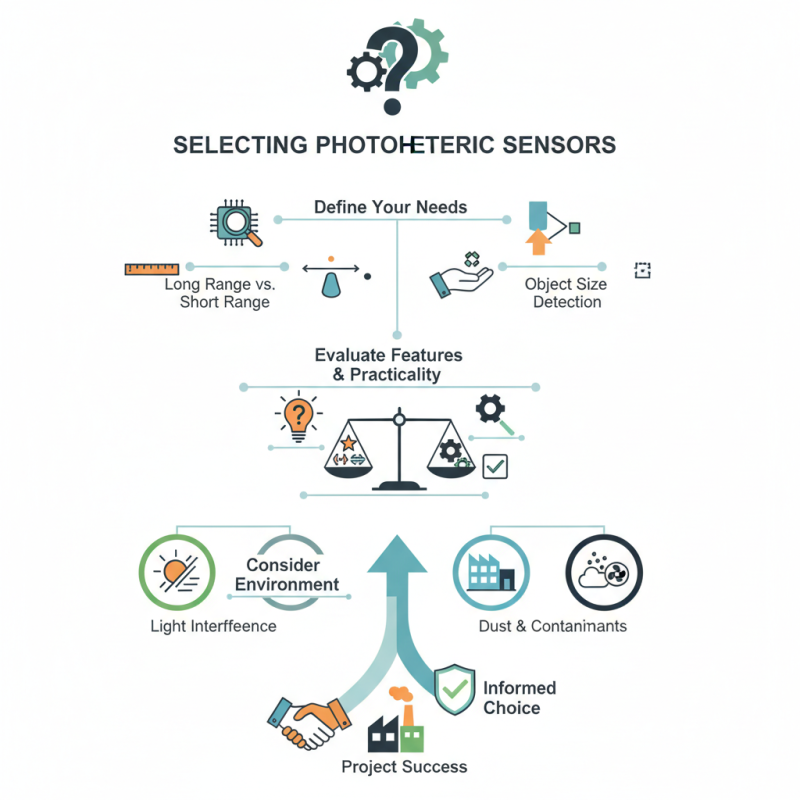
Choosing the right Photoelectric Sensors can be challenging. These devices play a crucial role in automation and detection applications. However, with many options available, making a decision isn't straightforward.
Different models serve various purposes. Some are designed for long-range detection, while others excel in detecting small objects. Understanding your specific needs is essential to select the best sensor. You might find yourself drawn to features that seem compelling. Yet, it’s vital to weigh their practicality against your requirements.
Consider installation environments as well. Factors like light interference or dust levels can impact performance. This makes careful consideration necessary. Reflecting on these aspects will help you make an informed choice. Your project’s success may hinge on the right Photoelectric Sensors. Don’t overlook their potential impact on your operations.
Understanding Photoelectric Sensors: Types and Applications
Photoelectric sensors play a vital role in various industries. They are crucial for automation, detection, and safety applications. Three main types exist: retro-reflective, through-beam, and diffuse sensors. Each type serves different needs based on operational environments. Retro-reflective sensors are excellent for object detection over moderate distances. They minimize installation complexity yet can be sensitive to ambient light. On the other hand, through-beam sensors often provide greater accuracy at longer ranges. However, they require precise alignment, which can pose a challenge in dynamic settings.
According to a recent report by Markets and Markets, the photoelectric sensor market is projected to reach $2.58 billion by 2026, growing at a CAGR of 8.3%. This growth indicates their increasing importance in factory automation and material handling. Industries prefer them for their speed and reliability. However, sensor miscalculations can lead to costly errors. Choosing the wrong type for an application may result in malfunction. Users must carefully assess their operational conditions. Factors like dust, moisture, and temperature variations can impact sensor performance. With the right selection, companies can optimize their processes considerably.
Key Factors to Consider When Selecting Photoelectric Sensors
Choosing the right photoelectric sensor can be challenging. Several key factors influence the decision. One significant factor is the type of sensing technology used. Photoelectric sensors can employ through-beam, retro-reflective, or diffuse sensing methods. According to industry reports, retro-reflective sensors are popular for their versatility in various applications.
Another important consideration is the sensing distance. Different applications require different distances. For instance, detecting objects in packaging lines may need sensors with a range of up to 10 meters. Meanwhile, proximity sensors may function effectively at distances less than 1 meter. The environment in which sensors will operate also matters. Factors like dust, moisture, and temperature extremes can affect sensor performance.
Lastly, consider response time. A faster response time can be crucial in high-speed manufacturing environments. Sensors can vary from 1 ms to over 50 ms. It’s essential to match the sensor's performance with the specific application's demands. Sometimes, users overlook these details, leading to suboptimal choices. Understanding these aspects can guide better decision-making for your needs.
Evaluating Performance Characteristics of Photoelectric Sensors
When selecting photoelectric sensors, evaluating their performance characteristics is crucial. There are key metrics to consider. Sensitivity is one of them. The right sensor should detect objects with minimal reflection. In industrial settings, non-reflective surfaces can lead to challenges. Some reports indicate that misalignment with the target can reduce sensitivity by up to 50%. This emphasizes the need for precise calibration.
Another important aspect is the response time. Industrial applications often require high-speed operation. A sensor with a response time of less than 1 ms can greatly enhance system efficiency. Conversely, sensors with slower response times may cause bottlenecks. According to industry data, a 20% delay in sensor response can lead to increased production costs.
Finally, consider environmental factors. Sensors must perform reliably in various conditions. Dust, humidity, and temperature changes can impact their functionality. In extreme conditions, performance can drop by 30%. Ensuring that a sensor’s specifications match the operational environment is vital. Balancing these performance traits may lead to better decision-making when choosing the right photoelectric sensor for your needs.
Installation and Maintenance Tips for Photoelectric Sensors
When installing photoelectric sensors, location is crucial. Ensure they are mounted at an appropriate height. This can prevent accidental damage. Sensors should be free from obstructions. Trees, walls, or machinery can interfere with their operation. Consider environmental factors too, such as light conditions.
Regular maintenance is key for optimal performance. Clean the sensor lenses regularly. Dust and debris can hinder detection. Check wiring connections for wear or corrosion. It's helpful to schedule routine inspections. If sensors malfunction, they must be calibrated. Ignoring small issues may lead to larger problems. Tracking sensor performance is advisable.
Don't overlook the manual. While it may seem tedious, it contains valuable information. Each model may have specific requirements. Ignoring these could lead to installation errors. Keeping a maintenance log may help in future troubleshooting. Overall, a proactive approach ensures that sensors function effectively over time.
Industry-Specific Considerations for Choosing Photoelectric Sensors
Choosing the right photoelectric sensors requires careful consideration of the specific industry. Each sector has unique needs and challenges. In manufacturing, sensors must endure harsh environments. Dust and temperature fluctuations can impact performance. Reliability is crucial to avoid costly downtime.
In packaging, speed and precision are essential. Sensors should detect tiny labels on fast-moving products. Here, accuracy affects the entire production line. In food processing, sanitary conditions are a priority. Sensors need to withstand washdowns without losing effectiveness. Failing to choose the right sensor can lead to safety issues.
Industries like automotive and textiles demand different features. For automated assembly lines, sensors must detect variations in surface conditions. In textiles, controlling light interference is vital. Assessing these specific needs is important. Overlooking factors may lead to inefficiencies. Regularly reassessing sensor choices can improve operations.
Photoelectric Sensors Selection Criteria
This chart illustrates the importance level of various criteria when choosing photoelectric sensors for specific industry needs. The assessment helps in making informed decisions based on key features relevant to specific applications.