China Top 10 Wear Resistant Solid Wheel Suppliers
China’s industrial tire sector is expanding alongside warehousing, logistics, construction, and port operations. These environments demand dependable Wear Resistant Solid Wheels. They must survive sharp debris, heavy loads, repeated braking, and long indoor shifts.
MarketsandMarkets’ Industrial Tires Market report identifies solid tires as an important category for material-handling equipment. Its analysis links demand with warehouse automation, forklift fleets, and infrastructure development. Grand View Research also reports continued growth in the global material-handling equipment market. This growth supports stronger demand for durable wheel solutions. However, market growth alone does not prove supplier quality.
This guide examines ten leading Chinese suppliers through practical purchasing criteria. These include tread compound, load rating, wheel dimensions, heat resistance, production capacity, testing systems, export experience, and after-sales support. Product catalogs can look impressive. Factory evidence matters more. A buyer should request test reports, batch records, and application references before placing a large order.
The International Organization for Standardization provides relevant guidance through standards such as ISO 3691 for industrial trucks. Compliance requirements may differ between countries and applications. Therefore, buyers should verify local regulations and equipment compatibility. A wheel designed for a warehouse may fail on rough concrete. Small details matter, including axle fit, floor marking, and operating temperature.
This ranking is not an official certification. It is a practical starting point based on publicly available information and industry relevance. Supplier capabilities can change. Independent verification remains necessary. That is the honest limitation. The strongest choice balances price, service life, safety documentation, and measurable performance.
What Are Wear-Resistant Solid Wheels?
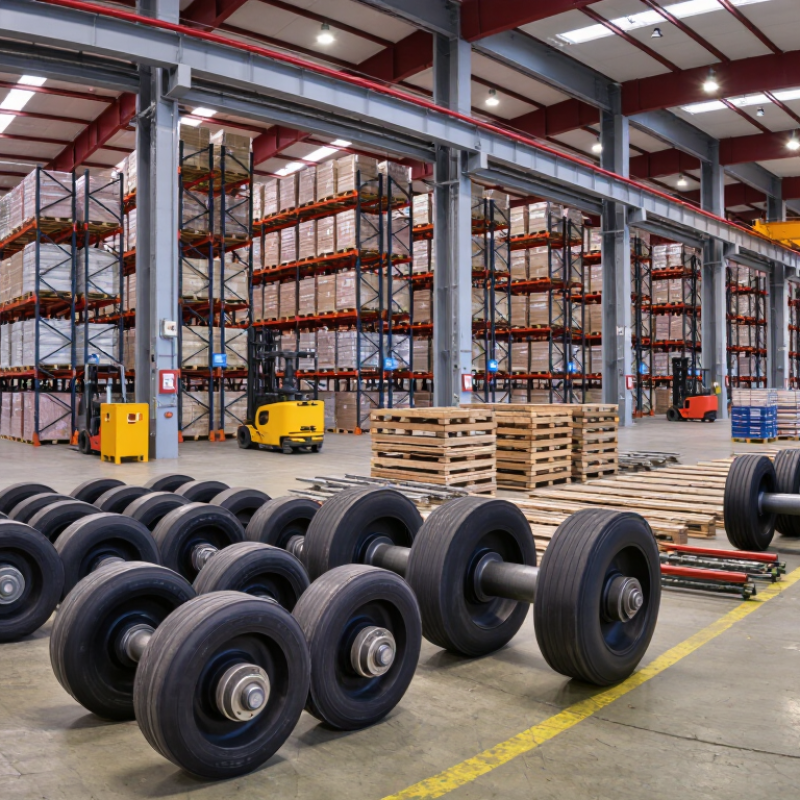
Wear-Resistant Solid Wheels are airless wheels made from dense rubber, polyurethane, or layered elastomers. They resist punctures because they contain no inflatable chamber. Their structure supports heavy loads on concrete floors, ramps, and rough warehouse surfaces. The outer tread absorbs impact, while the hub transfers torque to the axle. Some designs use steel or reinforced polymer cores.
Grand View Research estimated the global solid tires market at about USD 5 billion in 2023, with continued growth through 2030. The report links demand to material-handling equipment, construction vehicles, and reduced downtime. However, “wear-resistant” is not absolute. Abrasive dust, sharp edges, excessive loads, and poor alignment can still damage a wheel. ISO 4649 abrasion testing helps compare rubber compounds, but laboratory results cannot fully predict every workplace. This is where practical inspection matters.
Tips: Match the wheel compound to the floor and load. Polyurethane suits clean, smooth floors and low rolling resistance. Rubber often performs better on uneven ground and offers stronger shock absorption. Check tread cuts, flat spots, hub looseness, and unusual vibration weekly. Keep records. A cheaper wheel may cost more when replacement labor and downtime are included. Misjudging floor conditions remains a common mistake.
Key Features and Performance Standards of Solid Wheels
Wear-resistant solid wheels must be judged by measurable performance, not appearance. Grand View Research estimated the global industrial tires market at USD 7.73 billion in 2023, with a projected 5.7% CAGR through 2030. This growth increases supplier choice, but specifications still matter more than marketing language. ISO 3739-1 defines industrial tire dimensions, load ratings, and rim compatibility. Buyers should request certified load data at the actual operating speed, not only the maximum advertised capacity.
Hardness commonly ranges from 70 to 95 Shore A, depending on the polyurethane or rubber compound. Higher hardness can reduce rolling resistance on smooth concrete. It may also transmit more vibration across cracked floors. EN 12527 provides test methods for castors and wheels, including rolling resistance, endurance, and impact evaluation. A credible supplier should disclose test loads, cycle counts, temperature conditions, and failure criteria. Ask for wet-floor traction results too.
Field inspections often reveal the overlooked detail: heat buildup near hubs. Continuous operation, heavy loads, and poor ventilation can soften compounds and shorten service life. Some technical reports associate solid-wheel failures with overloading, sharp turning, and uneven floors rather than material defects. That finding deserves attention. A wheel can look nearly new and still lose grip. Suppliers should provide traceable batch records, dimensional tolerances, and replacement guidance. No single hardness rating solves every warehouse problem.
How to Evaluate China’s Solid Wheel Suppliers
China Top 10 Wear Resistant Solid Wheel Suppliers
How to Evaluate China’s Solid Wheel Suppliers
Evaluating solid wheel suppliers requires more than comparing online prices. Start with the wheel’s working environment, including floor condition, load weight, temperature, and daily travel distance. A suitable supplier should explain how rubber, polyurethane, or other compounds match these conditions. Vague answers deserve caution.
Request samples from several suppliers and inspect them after practical use. Check tread hardness, wheel roundness, hub alignment, and surface cracks. Use a calibrated scale to verify load capacity. Ask for abrasion test results, dimensional drawings, batch records, and inspection reports. A professional factory should connect each report with a production batch. Photos alone are weak evidence.
Visit the production site when possible, or arrange a live video audit. Observe molding equipment, material storage, curing controls, and final inspection. Ask how rejected wheels are recorded. Traceability matters. So does consistency.
A polished catalog proves little. Sample performance may also differ from mass production. This is where buyers often underestimate risk. Require a written specification before ordering. It should define tolerance, hardness range, axle size, packaging, lead time, and replacement terms. Check whether the supplier has experience with similar industrial equipment, not merely general export history. Clear communication is useful, but documented quality controls are more reliable. Even experienced buyers can overlook floor contamination or uneven loading during evaluation. Small field tests can reveal these practical failures before a large purchase.
Top 10 China Suppliers of Wear-Resistant Solid Wheels
China has become a major sourcing base for wear-resistant solid wheels used in warehouses, factories, carts, and material-handling equipment. The top 10 China suppliers of wear-resistant solid wheels usually offer polyurethane, rubber, or composite wheel designs. Their products are built for heavy loads, repeated movement, and demanding floors.
A practical evaluation should begin with material quality. Ask about hardness, load capacity, abrasion testing, and temperature performance. Suppliers with dependable production normally provide test records, dimensional drawings, and clear inspection standards. Factory experience also matters. A supplier familiar with forklifts, platform trucks, and automated equipment can recommend suitable tread profiles and hub materials. Small details matter.
During supplier comparisons, inspect samples under realistic conditions. A wheel may look durable but develop flat spots after long storage or constant loading. This is an easy point to miss. Check axle fit, rolling resistance, noise, and floor marking before placing a large order. It is also useful to review production consistency across several batches, not just one attractive sample. Reliable suppliers explain tolerances, packaging methods, replacement procedures, and delivery limits without vague promises. Some evaluations may still be imperfect because actual service conditions differ between factories, warehouses, and outdoor yards. That uncertainty should be recorded, not hidden.
Applications, Customization, and Purchasing Considerations
China’s top 10 wear resistant solid wheel suppliers serve factories, warehouses, hospitals, and material handling systems. These wheels perform well on concrete, steel plates, and smooth industrial floors. They are useful where punctures, air leaks, or frequent maintenance create costly delays.
Application conditions should guide the purchase. Check the total load, travel speed, floor joints, temperature, chemicals, and daily operating hours. A wheel for a quiet hospital trolley needs different materials from one used under a heavy warehouse cart. Small details matter. Poor floor conditions can reduce service life sharply.
Customization may include wheel diameter, tread hardness, core material, bearing type, color, and mounting dimensions. Some projects require non-marking surfaces or better resistance to oil and moisture. Ask suppliers for drawings, load ratings, material data, and sample testing. I have seen buyers focus on unit price and overlook installation tolerance. That mistake can cause uneven wear. A low-cost wheel may become expensive after repeated replacement. Compare actual working life, delivery reliability, quality inspection, and after-sales support. Request production samples before ordering large quantities. Testing should reflect real loads, not only laboratory conditions. Even experienced buyers can miss vibration, turning frequency, or floor temperature during evaluation.