


Choosing reliable suppliers for an Abs Enclosure requires more than counting factory listings. Material quality, mold precision, sealing performance, customization, and delivery consistency all influence the final product. China has a broad manufacturing base, yet not every supplier offers the same engineering depth or inspection discipline.
According to enclosure-design specialist Dr. Mark J. Heller, “A strong enclosure protects the electronics, but a smarter enclosure also simplifies assembly, testing, and maintenance.” This practical view matters when comparing China’s top manufacturers. A polished catalog is useful. It is not enough.
This guide examines ten Chinese Abs Enclosure manufacturers through visible, measurable criteria. These include ABS resin selection, wall-thickness control, IP-rated design capability, CNC and injection-molding experience, tooling support, and quality documentation. It also considers communication speed, sampling procedures, production capacity, and export experience. Small details matter. A warped lid can delay an entire project.
The ranking should not be treated as permanent. Markets change, factories upgrade equipment, and some suppliers perform better for custom orders than standard boxes. That is where this topic becomes slightly imperfect. Public information often reflects marketing claims, not long-term field performance. Buyers should request samples, inspection reports, and clear production agreements before choosing a partner.
From compact control boxes to outdoor electrical housings, the manufacturers below represent different strengths. Some focus on volume. Others stand out through customization or industrial design support. The best choice depends on your application, budget, certification needs, and tolerance for production risk.
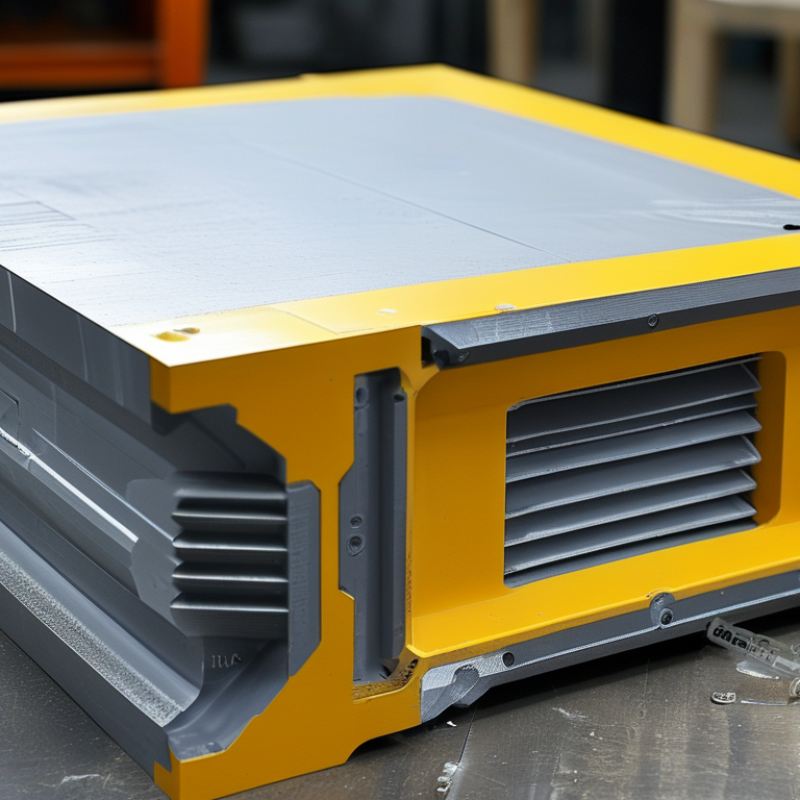
China’s top 10 ABS enclosure manufacturers should be assessed beyond price and production capacity.
ABS offers low weight, impact resistance, electrical insulation, and easy machining. It performs well around control panels, sensors, and indoor electronics. However, standard ABS can discolor under prolonged ultraviolet exposure. Heat can also reduce dimensional stability. These limitations matter during supplier evaluation.
IP ratings describe protection against dust and water, not overall product quality. An IP54 enclosure may resist dust and water splashes, while IP65 offers stronger protection against dust and water jets.
The rating applies only when covers, gaskets, cable glands, and fasteners are correctly installed. For 2026, demand is expected to rise with industrial automation, smart energy systems, and connected equipment.
Public forecasts vary, so buyers should verify regional data instead of trusting one growth percentage. My practical concern is simple: many comparisons overlook testing conditions.
Tips:
Request material data sheets, impact-test results, flame ratings, and IP test reports. Confirm whether the enclosure uses new ABS or recycled content. Check wall thickness at corners and mounting posts.
Ask for samples before approving tooling. A small fit problem can become expensive later. Also inspect gasket compression after repeated opening. This step is often skipped, but it deserves attention.
A credible ranking should begin with verifiable certifications, not attractive catalog photos. ISO 9001 indicates controlled quality processes, while ISO 14001 reflects environmental management. For enclosure safety, buyers should check UL 94 flame ratings and RoHS or REACH declarations. These documents must match the factory and product scope. A certificate alone proves little.
Production capacity deserves measurable evidence. Industry reports from Grand View Research and Fortune Business Insights continue to identify electronics, automotive, and industrial equipment as major plastics demand sectors. Therefore, compare injection-machine count, clamping force, monthly output, and backup capacity. A supplier producing 500,000 housings monthly may still struggle with urgent tooling changes. Ask for recent production records, inspection samples, and defect-rate data. Numbers can be polished.
MOQ and lead time often reveal the real purchasing experience. Standard ABS boxes may support low MOQs, while custom colors, logos, inserts, and waterproof structures require higher volumes. Request separate timelines for tooling, first samples, mass production, and shipping. A practical benchmark is two to four weeks for established standard models, but custom projects can take much longer. Treat every promise carefully. Delays happen.
Customization should include CAD review, wall-thickness control, ventilation design, sealing performance, and material consistency. Testing reports from recognized laboratories add authority, especially for flame resistance and ingress protection. The best ranking combines documented capability, responsive engineering, stable delivery, and transparent limitations. I would leave uncertain suppliers unranked rather than reward impressive claims.
China’s top 10 ABS enclosure manufacturers should be compared through measurable technical performance, not catalog appearance. A practical review checks resin grade, wall thickness, dimensional tolerance, and impact resistance. UL94 flammability ratings matter for electrical housings, while operating temperatures reveal whether a design suits factories, control cabinets, or outdoor equipment. Some suppliers list impressive values but provide limited test evidence. That gap deserves attention.
Ingress protection is another key metric. A reliable enclosure should show its IP rating, gasket material, closure method, and test conditions. Buyers can inspect whether the enclosure maintains sealing after repeated opening. Weak hinges and uneven compression often create problems. They are easy to overlook. Surface finish, UV resistance, and color stability also affect long-term use, especially under sunlight or chemical exposure.
The comparison should also measure manufacturing consistency. Useful indicators include sample-to-sample dimensions, insert alignment, screw boss strength, mold maintenance, and inspection records. Short lead times are helpful, but rushed tooling may leave flash, sink marks, or warped covers. Production experience matters here. Still, technical data can be imperfect; laboratory results may not reflect field handling. A careful buyer should request samples, drawings, material certificates, and recent quality records before placing a larger order. Cost remains relevant, but the cheapest enclosure may create higher assembly and replacement expenses.
When comparing China’s top ABS enclosure manufacturers, start with the technical evidence, not appearance. UL94 ratings show flame behavior under defined laboratory conditions. V-0 offers faster self-extinguishing performance than V-1 or V-2. HB is a lower flammability classification. Check the rating at the actual wall thickness. Material matters more.
A 2 mm wall may reduce weight, but it can flex around screw posts. Thicker walls improve stiffness, thread support, and impact resistance. They also increase material use and may create molding sink marks. Internal ribs can add strength without making every wall heavy. I have seen elegant housings fail at the hinge because the design ignored local stress. That shortcut fails.
Temperature range needs equal attention. Many general-purpose ABS grades suit moderate indoor service, often around -20°C to 80°C, but exact limits vary. Heat from power components can create hot spots near the enclosure wall. Review continuous-use temperature, impact strength, UV exposure, and electrical insulation data. Request test reports for the selected resin and thickness. I once treated the published temperature range as a guarantee. That was too optimistic. Temperature cycling, fasteners, and repeated impacts can change real performance. Check production samples, dimensional stability, and lot consistency before approving a large order.
| No. | Selection Dimension | Recommended Target | Commonly Available Range or Guidance | What to Verify Before Purchase |
|---|---|---|---|---|
| 1 | Base Enclosure Material | UL-recognized ABS or an ABS/PC blend selected for the intended environment. | ABS provides good impact resistance, surface finish, and electrical insulation. ABS/PC blends generally provide better heat and impact performance than standard ABS. | Request the exact resin designation, technical data sheet, colorant information, and applicable material recognition documentation. |
| 2 | UL94 Flammability Grade | Use V-0 where the enclosure is part of equipment requiring strong flame-retardant performance. | Common grades include HB, V-2, V-1, and V-0. V-0 has more demanding vertical-burning performance than V-1 and V-2. | Confirm that the UL94 rating applies to the exact material, color, and tested wall thickness. UL94 is not automatically a complete product safety approval. |
| 3 | Wall Thickness | Design most general-purpose molded ABS walls around 2.0–3.0 mm with consistent thickness. | Typical injection-molded ABS walls are approximately 1.5–4.0 mm. Thin walls may require flow analysis; thick sections can create sink marks and warpage. | Check the minimum wall thickness, corner transitions, ribs, bosses, draft angles, and whether the stated UL94 rating is valid at that thickness. |
| 4 | Operating Temperature | Select a continuous-use range that maintains a safety margin above and below the actual application temperature. | General-purpose ABS enclosures are commonly specified around −20°C to +80°C. High-temperature formulations may extend the upper limit, depending on the grade and load. | Review the resin’s heat-deflection temperature, Vicat softening temperature, impact data, and long-term aging results rather than relying only on a marketing range. |
| 5 | Impact Resistance | Choose an impact-modified grade for handheld, portable, outdoor, or industrial equipment. | ABS normally offers better impact resistance than many unmodified styrenic plastics, while low-temperature impact performance varies significantly by grade. | Ask for Izod or Charpy impact values, test temperature, specimen condition, and any drop-test results for the finished enclosure. |
| 6 | Ingress Protection | Specify the required IP rating only when sealing, joints, cable entries, and assembly are engineered as a complete system. | Common requirements include IP54 for limited dust and splash protection, IP65 for dust-tight and water-jet protection, and higher ratings for more demanding conditions. | Verify testing to IEC 60529, including the final gasket, screws, vents, connectors, cable glands, and assembled product configuration. |
| 7 | UV and Weather Resistance | Use UV-stabilized ABS only for limited outdoor exposure; consider a more weather-resistant material for prolonged direct sunlight. | Standard ABS can discolor, embrittle, or lose gloss under extended UV exposure. UV-stabilized grades improve performance but do not eliminate weathering. | Request accelerated weathering data, UV stabilizer details, color-change limits, and the intended outdoor service duration. |
| 8 | Electrical Insulation | Select a material with suitable dielectric strength, volume resistivity, and tracking performance for the voltage and pollution environment. | ABS is commonly used as an electrical insulating housing material, but electrical properties vary with grade, moisture, temperature, fillers, and wall thickness. | Check dielectric strength, comparative tracking index, flammability classification, creepage, clearance, and the requirements of the applicable equipment standard. |
| 9 | Manufacturing Process and Tolerances | Use injection molding for repeatable production volumes and a properly designed tool; use CNC machining or 3D printing for prototypes and low quantities. | Injection molding typically provides better surface consistency and unit cost at volume. Actual tolerances depend on dimensions, geometry, tooling, and process control. | Confirm dimensional tolerances, draft angles, parting lines, gate locations, insert methods, color consistency, and first-article inspection procedures. |
| 10 | Compliance and Documentation | Require traceable documentation matching the final enclosure material, design, and production version. | Relevant documents may include material data sheets, UL94 evidence, RoHS and REACH declarations, IP test reports, dimensional inspection records, and quality certificates. | Check document revision, test laboratory, sample configuration, test conditions, production batch traceability, and whether certification covers the finished assembly. |
Important: Temperature limits, UL94 classifications, impact values, tolerances, and IP ratings are grade- and design-dependent. Always validate the exact enclosure configuration and material documentation for the intended application.
China Top 10 ABS Enclosure Manufacturers?
Selecting China’s leading ABS enclosure manufacturers requires more than comparing online quotations. Quality begins with resin traceability, mold control, wall-thickness checks, and documented inspections. ABS housings should be evaluated against relevant flammability requirements, including UL 94 classifications and IEC 60695 testing principles. Production audits should also verify dimensional records, impact testing, and batch consistency. Some suppliers pass a sample inspection but struggle during continuous production. That weakness is easy to miss.
Compliance evidence separates serious exporters from low-cost traders. The ISO Survey 2023 recorded more than 400,000 ISO 9001 certificates in China, showing broad quality-system adoption. Certification alone proves little. Buyers should request valid certificates, corrective-action records, RoHS or REACH declarations, and material test reports. Independent laboratory verification remains valuable for electrical, industrial, and outdoor applications. Documentation can be incomplete.
Pricing depends on resin grade, mold complexity, surface finish, packaging, order volume, and testing requirements. A basic ABS box may be competitively priced, while custom tooling can change the total cost sharply. Export performance should include lead-time stability, carton protection, customs accuracy, and after-sales response. The World Bank’s Logistics Performance Index 2023 ranked China 19th globally, supporting its strong logistics capability, but factory-level performance still varies. Request shipment records, inspection photos, and a pilot order before approving a long-term supplier.
5107 County Road C
Manitowoc, WI 54220
920-726-4526