

Choosing the best 5 Axis Cnc Machine in 2026 requires more than comparing brochures, spindle speeds, or attractive price tags. A machine may promise impressive accuracy, yet perform differently under real production pressure. Tool changes, thermal growth, control responsiveness, and after-sales support can determine whether a shop meets its delivery schedule.
This guide examines leading machines through practical manufacturing criteria. We consider simultaneous five-axis movement, work envelope, rotary-table stiffness, spindle torque, and positioning accuracy. We also look at programming compatibility, operator training, maintenance access, and available service networks. These details matter when a titanium component leaves visible tool marks or a complex impeller needs another finishing pass. Independent test results and manufacturer documentation provide useful evidence, but shop-floor experience remains essential.
There is no universal winner. A compact machining center may suit an aerospace supplier with limited floor space, while a heavier platform may better serve mold makers running hardened steel. Budget matters, but downtime matters more. Some specifications also require careful interpretation. Quoted accuracy may reflect ideal laboratory conditions, not a warm production environment. That distinction is easy to overlook.
The strongest choice balances precision, reliability, software, and long-term operating costs. It should also match your team’s skills and the materials you actually cut. Before selecting a model, verify sample-part results, service response times, and realistic installation requirements. Ask difficult questions. A machine that looks perfect on paper may reveal limitations after six months of daily use.
In 2026, the best 5-axis CNC machine is not automatically the fastest. It is the machine that maintains accuracy when temperature, tool load, and cutting angles change. That definition matters. Deloitte’s 2023 Smart Manufacturing and Operations Survey found that 86% of manufacturers view smart manufacturing as a major competitiveness driver within three years. A capable 5-axis machine must therefore connect smoothly with probing, production software, and inspection systems.
Accuracy should be verified, not simply advertised. Look for volumetric accuracy tests, thermal compensation records, spindle growth data, and repeatability results. A practical trial should cut a five-sided aerospace-style part, inspect deep pockets, and measure tool marks after several hours. The test should include aluminum and harder alloys. One material can hide weaknesses.
Control quality matters too. The International Federation of Robotics reported 162 robots per 10,000 manufacturing employees globally in 2023, according to World Robotics 2024. This supports choosing a machine prepared for automated loading, pallet changes, and consistent data exchange. Service response, calibration training, chip evacuation, and energy use deserve equal attention. A powerful spindle may still disappoint.
Specifications never tell everything. A machine can be highly accurate in a showroom and unstable beside a warm production line. My own evaluation would leave room for doubt, especially when vendors provide limited test conditions. The best choice is the one that proves stable performance, predictable maintenance, and measurable part quality under real workload.
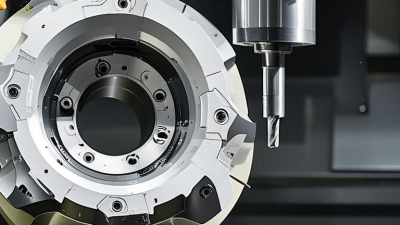
What Is the Best 5 Axis CNC Machine in 2026?
A 5-axis CNC machine moves a cutting tool along three linear axes and two rotary axes. The rotary axes tilt the workpiece or spindle, keeping the cutter aligned with complex surfaces. This reduces repositioning and can machine several faces in one setup. That matters. According to a 2024 MarketsandMarkets report, the global 5-axis CNC machining center market is projected to grow through 2030, driven by aerospace, medical, and automotive demand.
In practical machining, the advantage appears on turbine blades, orthopedic implants, impellers, and deep molds. A controlled tool angle improves surface finish and reduces unnecessary cutting force. Fewer setups can also reduce datum errors and handling time. Small errors compound. However, five axes do not automatically produce better parts. Collision checking, post-processor accuracy, thermal stability, and operator skill remain critical. A 2023 report from the International Federation of Robotics recorded continued growth in industrial robot installations, reflecting wider factory investment in automated production, but automation still requires disciplined process control.
The best machine in 2026 depends on the part, tolerance, material, and production volume. High-speed aluminum work demands different behavior from hardened steel machining. Medical components need traceable inspection, while mold production may prioritize smooth simultaneous motion. I would question any claim based only on axis count. A poorly calibrated machine can waste expensive material quickly. The machine’s working envelope, spindle torque, probing system, software simulation, and local technical support deserve equal attention. Five-axis capability is powerful, but it is not magic.
When asking what the best 5-axis CNC machine is in 2026, compare measurable performance, not brochure claims. Grand View Research estimated the global 5-axis CNC machine market at about USD 8.5 billion in 2023, with continued growth through 2030. That expansion makes careful specification more important.
Start with machine kinematics. A trunnion table suits compact parts, while a swivel-head design handles larger workpieces. Check working envelope, axis travel, rotary torque, and collision clearance. Spindle speed alone can mislead. A 12,000-rpm spindle may outperform a faster unit when torque remains stable during heavy cutting. Thermal control also matters. ISO 230-2 provides methods for testing positioning accuracy and repeatability, so request test results under defined conditions. Do not accept vague “high precision” language.
Control software deserves equal attention. Look for five-axis tool-center-point control, smooth interpolation, simulation, probing, and reliable postprocessor support. A single probing cycle can reduce setup errors, but only when calibration is maintained. Practical trials reveal more than specifications. Cut a representative titanium or aluminum part, measure wall deviation, and record cycle time, tool wear, and surface finish. Service response, spare-parts availability, energy use, and training costs can change the real ownership price. I would also challenge my own comparison: a premium machine may be wasteful for simple three-axis work, while a cheaper model can struggle with thermal drift and complex simultaneous machining.
Key comparison benchmarks for evaluating industrial 5-axis CNC machines. The figures represent practical specification ranges commonly found across entry-level, mid-range, and high-performance machine classes, not any specific brand.
How to compare: Higher spindle speed, tool capacity, table load, and rotary-axis speed can improve productivity. Lower positioning repeatability values indicate greater precision. The best machine depends on the required material, workpiece size, tolerance, automation level, and production volume.
What Is the Best 5 Axis CNC Machine in 2026?
The best 5-axis CNC machine depends on the part, material, and required accuracy. In practice, no single design suits every workshop. A trunnion-style machine rotates the workpiece beneath a vertical spindle. It offers strong rigidity, simple loading, and excellent access for compact parts. This design works well for impellers, medical components, and complex aluminum housings. However, large workpieces may exceed its rotary table limits.
Swivel-head machines move the spindle around a fixed table. They handle heavier parts and offer flexible cutting angles. Head-head machines provide excellent access for deep cavities, although programming and collision control become more demanding. Gantry-style 5-axis machines suit large aerospace panels, molds, and oversized structures. Their strength is working volume, not always maximum rigidity. A 3+2 machine locks the rotary axes during cutting, while a continuous 5-axis machine adjusts all axes simultaneously. Continuous machining can reduce setups and improve surface flow, but it requires careful post-processing and simulation. Small errors can become expensive.
Tips: Check table load, working envelope, spindle torque, and rotary-axis accuracy before comparing prices. Test the machine with your real material and tooling. Ask for cut samples, not only brochures. Confirm operator training, service response, and software compatibility. I would also inspect chip evacuation closely; it is often overlooked. A beautiful specification sheet cannot fix poor daily access or difficult maintenance.
What Is the Best 5 Axis CNC Machine in 2026?
Choosing the best 5-axis CNC machine starts with your parts, not the machine’s brochure. A compact machine may suit dental components, while large aerospace fixtures need greater travel and structural rigidity. Research and Markets’ 2025 global report identifies aerospace, automotive, and medical production as major demand areas for 5-axis machining centers. Each sector requires different spindle speeds, payloads, and accuracy targets. Bigger is not always better.
Check whether you need simultaneous 5-axis cutting or 3+2 positioning. Simultaneous movement improves access to curved surfaces and can reduce setups. However, it also demands reliable software, postprocessing, and skilled programming. Ask for a test cut using your material. Examine surface finish, cycle time, tool wear, and thermal drift. Small details matter.
The control system should support probing, collision protection, tool monitoring, and practical data collection. Deloitte’s 2024 smart manufacturing survey found that 86% of manufacturers consider smart production important for future competitiveness. Connectivity is useful, but only when operators can understand the data. Otherwise, it becomes expensive decoration. Grand View Research estimates the broader CNC machine market will continue expanding through 2030, yet market growth does not prove a machine fits your factory. Compare total ownership costs, including installation, training, maintenance, energy, and downtime. I would also question optimistic accuracy claims. Measure them under your real cutting conditions.
A practical comparison of common 5-axis CNC machine configurations and the specifications that matter most.
| Machine Profile | Typical Work Envelope | Axis Configuration | Typical Spindle Range | Typical Rapid Traverse | Rotary Travel | Approximate Machine Weight | Best For | Main Advantages | Important Limitations |
|---|---|---|---|---|---|---|---|---|---|
| Compact Entry-Level Trunnion | 500–700 mm X 400–500 mm Y 400–500 mm Z |
3 linear axes plus rotary table and tilting axis | 8,000–12,000 rpm | 20–30 m/min | Approximately ±110° tilt 360° rotation |
3,000–5,500 kg | Training, prototypes, dental and small aerospace components | Lower purchase cost, smaller footprint, easier installation | Limited part size, lower chip-removal capacity, and less rigidity for heavy cutting |
| Mid-Size Production Trunnion | 700–1,000 mm X 500–700 mm Y 500–700 mm Z |
3 linear axes plus integrated 2-axis trunnion | 10,000–18,000 rpm | 30–40 m/min | Approximately ±120° tilt 360° rotation |
6,000–12,000 kg | General aerospace, medical, energy, and precision production | Balanced rigidity, accessibility, automation potential, and cycle time | Requires careful fixture and collision planning around the trunnion |
| High-Speed Simultaneous 5-Axis | 600–900 mm X 500–700 mm Y 450–650 mm Z |
Simultaneous movement of all three linear and two rotary axes | 18,000–30,000 rpm | 40–60 m/min | Approximately ±120° to ±135° tilt 360° rotation |
7,000–14,000 kg | Turbine blades, impellers, molds, dies, and complex contoured surfaces | Excellent surface finish, fewer setups, and shorter tool-reach requirements | Higher CAM, post-processor, tooling, and operator skill requirements |
| Heavy-Duty 5-Axis Tilt-Head | 1,000–2,000 mm X 700–1,200 mm Y 700–1,000 mm Z |
3 linear axes plus dual-axis tilting spindle head | 6,000–15,000 rpm | 20–35 m/min | Typically ±90° to ±110° head tilt Continuous rotary positioning available |
15,000–35,000 kg | Large structural parts, energy components, molds, and difficult-to-fixture workpieces | High rigidity, large capacity, and strong performance with tough materials | Higher floor-space, foundation, maintenance, and installation requirements |
| 5-Axis Mill-Turn Center | 500–900 mm turning diameter 500–1,000 mm turning length |
Linear milling axes, rotary B-axis, C-axis workholding, and turning spindle | 6,000–15,000 rpm milling spindle 3,000–6,000 rpm turning spindle |
25–40 m/min | Typically ±110° to ±135° B-axis Continuous C-axis |
8,000–18,000 kg | Parts requiring turning, milling, drilling, and angled features in one setup | Reduced work-in-process, fewer setups, and improved datum control | More complex programming, workholding, tooling, and process planning |
| Large Gantry 5-Axis Machine | 2,000–6,000 mm X 1,500–3,500 mm Y 800–1,500 mm Z |
Gantry linear axes with rotary table, tilting head, or both | 6,000–20,000 rpm | 15–30 m/min | Head tilt commonly ±110° to ±135° Table rotation varies by design |
30,000–150,000 kg | Large aerospace structures, marine parts, molds, and oversized industrial components | Handles large workpieces while maintaining multi-face machining capability | Highest capital cost, substantial installation needs, and slower setup changes |
5107 County Road C
Manitowoc, WI 54220
920-726-4526