


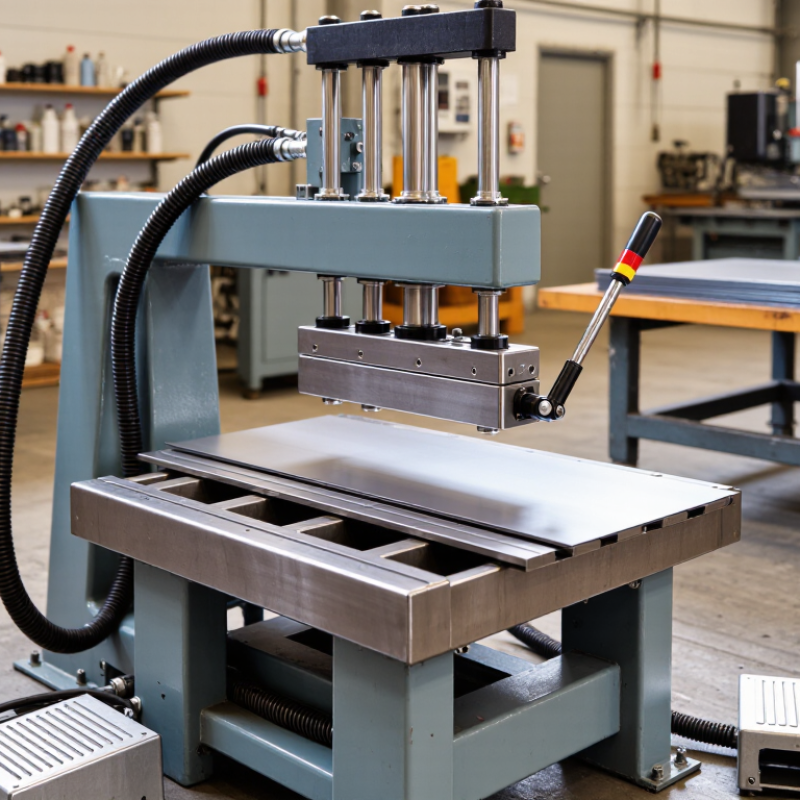
Why Choose a Pneumatic Bending Machine?
What Factors Should Guide Your Equipment Choice?
Choosing a pneumatic bending machine should begin with the workpiece, not the machine’s appearance. Check the material type, thickness, bend angle, and required production volume. A thin aluminum sheet needs different pressure control than a thick steel component. Measure your air supply carefully. Insufficient pressure can cause uneven bends, delayed cycling, and unnecessary wear. Accuracy matters too. If parts must fit within tight tolerances, ask about tooling stability, repeatability, and angle adjustment.
Your operators’ experience should also guide the decision. A simple control system may reduce training time, while advanced settings can support complex work. Consider the working environment. A busy workshop may need a durable machine designed for frequent cycles, not occasional fabrication. Maintenance access is often overlooked. Inspecting valves, seals, hoses, and lubrication points should not require dismantling half the machine. That would become frustrating quickly.
Tips: Test the machine with your actual material and tooling. Record pressure, cycle time, noise, and bend consistency. Ask for maintenance schedules and operator training details. Do not judge performance from one perfect sample. Real production includes temperature changes, rushed setups, and occasional mistakes. I would also leave room in the budget for tooling and air-system upgrades. Many buyers focus on purchase price, then discover their compressor cannot support the machine reliably. That detail can change the entire calculation.