What is 430 Stainless Steel Strips and Their Applications?
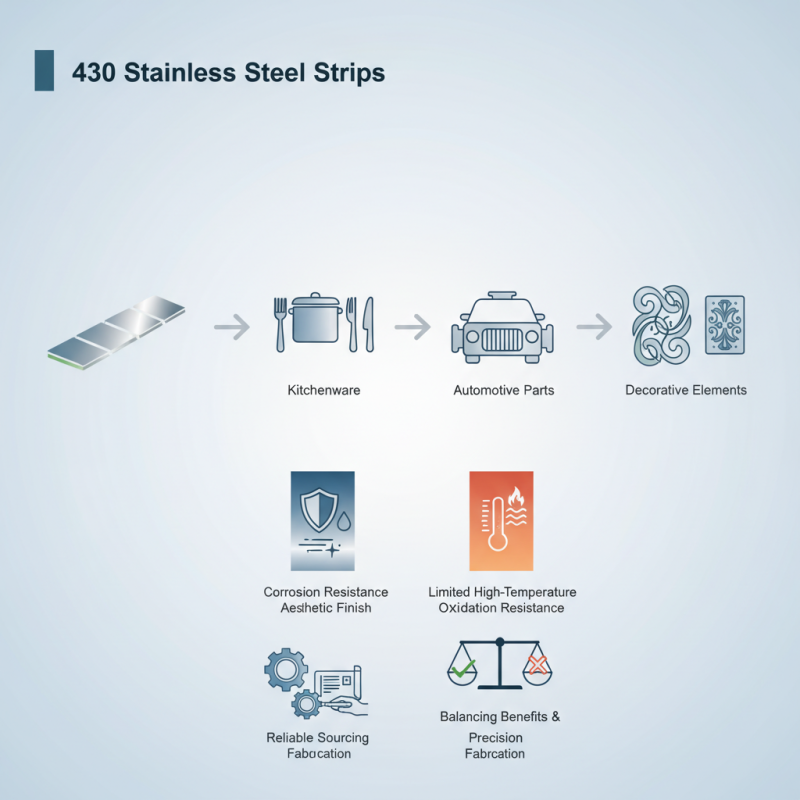
The term "430 Stainless Steel Strips" refers to a specific type of stainless steel, commonly known for its notable properties. This alloy contains chromium, which enhances corrosion resistance and provides a polished, aesthetic finish. Often, these strips find their way into various applications, including kitchenware, automotive parts, and decorative elements.
While they present many advantages, it’s essential to recognize their limitations. For instance, 430 Stainless Steel Strips are less resistant to oxidation at high temperatures when compared to higher alloyed stainless steels. This characteristic may influence their selection in critical environments.
The versatility of 430 Stainless Steel Strips makes them a popular choice in many industries. However, users must understand the context of application. Balancing benefits with potential drawbacks is crucial. Reliable sourcing and precision in fabrication will ensure optimal performance, reflecting the importance of expertise in this field.
What is 430 Stainless Steel?
430 stainless steel is a highly versatile material. It belongs to the ferritic family of stainless steels, which are known for their magnetic properties. This steel type contains about 16-18% chromium, offering good corrosion resistance in moderately corrosive environments. Its high chromium content provides strength and oxidation resistance, making it suitable for various applications.
Commonly, 430 stainless steel is used in household appliances, automotive components, and architectural features. Its shiny and smooth surface is often featured in kitchenware and decoration articles. However, it is important to note that it is not as resistant to corrosion as other stainless steel grades, like 304. This can lead to issues in harsh environments, which requires careful consideration of where it is utilized.
Despite its advantages, there are some limitations. Its brittleness can be a concern in certain applications. Engineers must evaluate factors like temperature and stress when using 430 stainless steel. Balancing its benefits with these drawbacks ensures better performance in real-world scenarios. It's important to understand these factors to avoid costly mistakes in production and design.
Composition and Properties of 430 Stainless Steel Strips
430 stainless steel is a ferritic alloy known for its corrosion resistance and excellent formability. Its primary composition includes 16% chromium and minimal nickel, which provides a balance between strength and ductility. The carbon content typically ranges from 0.08% to 0.12%, enhancing the alloy's hardness.
This steel type shines in specific environments, such as kitchen utensils, automotive exhaust systems, and decorative applications. Industry reports indicate that about 30% of the global stainless steel market utilizes ferritic grades like 430. Its low thermal expansion rate and high resistance to oxidation make it suitable for automotive parts. However, its lower mechanical properties compared to austenitic grades suggest limitations in high-stress applications.
The processing of 430 stainless steel strips is critical for their performance. While the material offers ease of fabrication, challenges remain in welding and machining. Experts recommend using TIG welding for best results. Nevertheless, achieving a perfect weld can be difficult due to its susceptibility to embrittlement. These factors highlight the need for ongoing research and development in processing techniques to fully harness 430 stainless steel's potential.
Common Applications of 430 Stainless Steel Strips
430 stainless steel strips are known for their versatility and durability. These strips have high corrosion resistance and moderate strength. Common applications span various industries, including automotive, kitchenware, and architectural fittings.
In the automotive sector, 430 stainless steel strips are often used for exhaust systems and other components. A report by Smithers cites that the automotive industry accounts for nearly 20% of stainless steel demand. This highlights the material's importance in enhancing vehicle performance and longevity. Countertops and sinks also benefit from 430 stainless steel due to its aesthetic appeal and functionality. Many manufacturers prefer it for its ease of cleaning and resistance to staining.
Building applications often utilize 430 stainless steel strips in railings and decorative elements. They provide a modern look while maintaining structural integrity. A study by the Stainless Steel Council shows that around 12% of stainless steel is consumed in construction. However, specific design limitations do exist. For instance, the magnetic properties of 430 stainless steel can be a disadvantage in some applications. Understanding these nuances is essential for optimal usage.
Advantages of Using 430 Stainless Steel Strips
430 stainless steel strips are renowned for their versatility and value. They contain 16-18% chromium, which provides excellent resistance to corrosion and oxidation. This makes them a reliable choice for various applications, especially in environments where exposure to moisture is a concern. Industries such as kitchen appliances, automotive, and architecture frequently utilize these strips for their aesthetic and functional qualities.
One notable advantage of 430 stainless steel strips is their affordability. Compared to other stainless steel grades, 430 offers a cost-effective solution without sacrificing quality. These strips are easy to work with, allowing for efficient fabrication processes. Additionally, their ability to be easily formed and cut makes them ideal for custom projects. However, it is essential to recognize that they can be less resistant to pitting than higher alloyed stainless steels.
The aesthetic appeal of 430 stainless steel is another benefit. It can be polished to a high shine, making it visually appealing for decorative applications. This finish helps improve the overall look of products, enhancing their marketability. On the flip side, its magnetic properties limit its use in certain applications. Understanding these characteristics is crucial to making informed decisions in material selection.
Maintenance and Care for 430 Stainless Steel Strips
Maintaining 430 stainless steel strips requires a keen understanding of their properties. This alloy is known for its corrosion resistance and aesthetic appeal. It has a composition of about 16-18% chromium and minimal nickel, making it less expensive than many other stainless steels. However, the lack of nickel may reduce its ability to resist certain corrosive environments.
Regular cleaning is essential. Use a mild detergent and water for general maintenance. Avoid harsh chemicals that can cause pitting or discoloration. For deeper stains, a gentle abrasive pad can help but should be used cautiously. According to industry reports, improper care can lead to surface damage that diminishes the strip's performance.
Tips:
- Always dry the strips after cleaning to prevent water marks.
- Use a soft cloth for drying to avoid scratches.
Storage is another critical factor. 430 stainless steel can be damaged if stored improperly. Ensure that strips are kept in a
dry, ventilated area. Avoid contact with other metals that may cause
galvanic corrosion. Even the storage environment needs attention to maintain quality, especially in humid conditions.
Tips: - Inspect the strips regularly for signs of oxidation.
- Store in a controlled environment to extend service life.